

Recycling does not start at the melting furnace or the pulping unit. It starts with size. Tires, e-waste, cardboard, plastic scrap and industrial offcuts are all too bulky, too mixed or too awkward to process as they arrive. Shredder machines fix this first problem, which is why they sit at the front of almost every serious recycling line.
Why Shredder Machines Are Essential in Modern Recycling
The First Step in Every Recycling Chain
Raw waste is uneven. A bale of cardboard, a stack of old circuit boards and a heap of rubber tires all behave differently. Downstream equipment such as granulators, separators, extruders and pulpers works best when material arrives in a consistent, manageable size.
A shredder turns bulky waste into uniform pieces. This makes the material easier to feed, sort and process, and it makes every later stage of recycling more efficient.
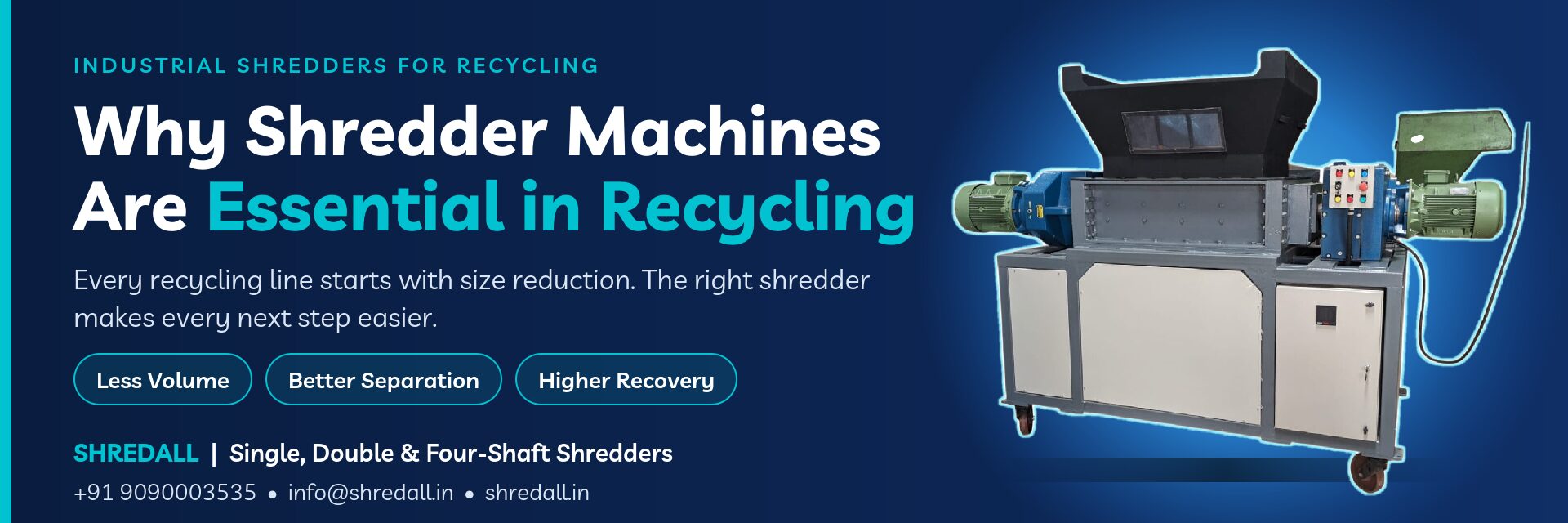
Why Shredding Matters
1. Volume reduction
Shredded material takes up far less space than whole items. This cuts storage and transport costs and keeps facilities cleaner and safer.
2. Better material separation
Once waste is broken down, metals, plastics, rubber and fibers can be separated more easily. This is especially important for e-waste (WEEE), where valuable metals are locked inside plastic casings and mixed components.
3. Higher recovery rates
Smaller, uniform pieces allow recyclers to recover more usable material from the same input. Less ends up in landfill and more goes back into production.
4. Safe handling of hazardous or sensitive waste
Some waste needs to be destroyed before it is recycled. Pharmaceutical packaging and rejected products often fall under GMP rules, and printed or branded material may need to be made unreadable. Shredders handle these jobs under controlled conditions.
5. Lower processing costs
Feeding pre-shredded material into later machines reduces wear on them and improves throughput. The upfront investment in the right shredder often pays back through lower running costs.
One Process, Many Waste Streams
Shredders are used across a wide range of industries:
-
Tires: Rubber is reduced to chips for reuse in fuel, flooring and civil applications.
-
E-waste and electrical appliances: Devices are broken down so metals and plastics can be recovered.
-
Paper and cardboard: Waste is shredded for pulping or converted into packaging fill material.
-
Plastics, flex and PVC waste: Bulky scrap is made ready for washing and granulating.
-
Packaging and print finishing waste: Production offcuts become reusable material instead of disposal cost.
-
Marine and industrial scrap: Heavy, mixed waste is reduced to manageable sizes.
Choosing the Right Shredder Configuration
Not every shredder suits every material. Machines are usually built in single-shaft, double-shaft and four-shaft configurations, and each one has its own strengths.
-
Single-shaft shredders give controlled, uniform output on materials such as plastics, paper and packaging waste.
-
Double-shaft shredders use high torque and slow speed to handle tough, bulky material like tires and heavy scrap.
-
Four-shaft shredders are often used as a secondary stage when finer, more precise output is needed.
Matching the machine to the material, the required output size and the daily volume matters as much as the machine itself. Manufacturers such as Shredall, a Mumbai-based industrial shredder manufacturer operating since 2014, build all three configurations for Indian and overseas recyclers. They also guide buyers through machine selection based on the waste being processed.
Supporting India’s Circular Economy Goals
India’s waste volumes are growing with its industry and consumption. Rules on e-waste, plastic and tire recycling are pushing businesses to manage waste more responsibly. Shredding is what makes compliance practical. It prepares waste for recovery instead of disposal.
For recyclers, the quality of the equipment decides how reliably the plant runs. Industrial-grade construction, robust cutting systems, easy operation, warranty cover and dependable after-sales support all matter over the long term. Shredall machines, manufactured in India and supplied worldwide, are designed around these needs.
Conclusion
Shredder machines are not just another piece of equipment in a recycling plant. They make every later step possible. By reducing volume, improving separation, raising recovery rates and handling sensitive waste safely, they connect waste generation to resource recovery. As recycling targets tighten and waste streams grow more complex, the right shredder will remain one of the most important investments in the process.
