

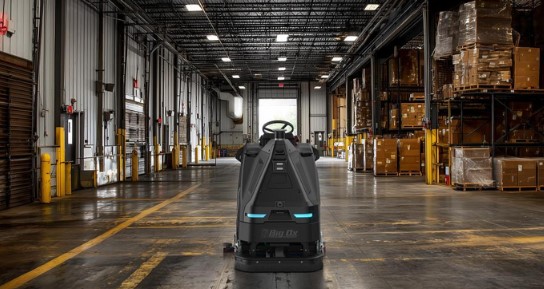
A robotic floor scrubber can be a game-changing investment for your facility’s cleaning operations. But too many companies make costly mistakes during the buying process that leave them with underperforming equipment, wasted budget, or a machine that simply doesn’t fit their operation.
Understanding these pitfalls before you commit can save you significant time, money, and frustration down the road. Here are the most common ones—and how to avoid them.
Mistake #1: Choosing Based on Price Alone
It’s tempting to go with the cheapest option, especially when budgets are tight. But the lowest sticker price rarely means the best value.
Lower-priced machines often:
- Use outdated or limited navigation technology that requires constant babysitting
- Need more manual intervention to complete cleaning cycles
- Struggle in complex or high-traffic environments
In most cases, a more capable autonomous floor scrubber pays for itself over time through labor savings and consistent performance. The upfront cost is higher, but the total cost of ownership is often lower.
Mistake #2: Ignoring Your Facility’s Size and Layout
Not every machine is built for every space. Buying without considering your facility’s layout is a fast track to poor cleaning coverage and wasted investment.
- Large warehouses need machines that can efficiently cover massive square footage without constant recharging or intervention
- Facilities with narrow aisles require precise navigation that won’t clip racking or get stuck between rows
- Spaces with ramps, dock plates, or floor transitions need machines with strong traction and stability
Today’s best industrial floor cleaning robots are purpose-built for industrial environments—handling both open areas and tight spaces while navigating around obstacles autonomously. Make sure whatever you buy actually matches the space it’ll be cleaning.
Mistake #3: Overlooking Navigation Capabilities
Navigation is arguably the most important feature of any robotic cleaning system. Older or cheaper machines often can’t adapt to real-world conditions, which leads to:
- Frequent stops when the machine encounters unexpected obstacles
- Missed areas that don’t get cleaned because the machine couldn’t reach them
- Constant human intervention to get the machine back on track
Advanced robotic floor scrubbers use LiDAR, cameras, and facility mapping to detect obstacles in real time—pallets, racking, equipment, people—and reroute automatically without stopping. If the machine can’t handle a dynamic warehouse floor on its own, it’s not truly autonomous.
Mistake #4: Underestimating Runtime and Autonomy
Run time and self-sufficiency matter more than most buyers realize, especially in large facilities.
Machines with limited autonomy are restricted by:
- Short battery life that requires frequent recharging
- Manual refilling and tank dumping between cycles
- Constant interruptions that break up cleaning coverage
More advanced autonomous floor scrubbers for warehouses can run 13+ hours continuously and return to a docking station on their own to refill water, dump waste tanks, and recharge—then resume cleaning automatically. That’s the difference between a machine that helps and a machine that handles it.
Mistake #5: Prioritizing Automation Over Cleaning Performance
A machine that moves around your facility autonomously is great—but it also needs to actually clean well. Don’t get so focused on the “robot” part that you forget to evaluate the “scrubber” part.
Key cleaning features to evaluate:
- Scrubbing and debris collection systems that work simultaneously in a single pass
- Strong water recovery to leave floors dry and safe, not just wet and pushed around
- Consistent, even cleaning pressure across the entire scrub path
Machines with cylindrical brush systems, for example, can sweep and scrub at the same time—eliminating the need for a separate pre-sweep step and delivering better results in high-debris environments.
Mistake #6: Neglecting Maintenance and Dealer Support
Every machine needs service eventually. Ignoring maintenance requirements and support availability before you buy is a recipe for unexpected downtime and expensive surprises.
Before purchasing, confirm:
- Parts are readily available—not proprietary components with weeks-long lead times
- You have access to a responsive, knowledgeable service team (not just a 1-800 number)
- The machine is built with durable, industrial-grade construction that minimizes repair frequency
A machine is only as good as the support behind it. The best automatic floor scrubber machine in the world won’t help you if it’s sitting broken in a corner waiting for a part.
Mistake #7: Overlooking Long-Term Ownership Costs
The purchase price is just the beginning. Many buyers don’t look closely enough at what the machine will cost to own over its full lifespan.
Some systems come with:
- Annual software licensing fees
- Subscription costs for basic functionality or cloud features
- Additional charges for updates, support, or feature unlocks
Other machines are designed for full ownership with no recurring fees—you buy it, you own it, and you get the complete capability without ongoing costs chipping away at your ROI. Understand the total cost of ownership before you sign anything.
Mistake #8: Buying Without a Cleaning Plan
This one’s more common than you’d think. Companies buy a robotic floor scrubber without thinking through how it’ll actually fit into their daily operations.
Before investing, answer these questions:
- How often will the machine need to run? Daily? Multiple times per day? Overnight?
- Which areas are the highest priority for cleaning?
- Will cleaning happen during active operations or only during off-hours?
Having a clear plan ensures the machine you buy actually matches your workflow—and that you’ll get the full benefit from day one instead of figuring it out on the fly.
The Bottom Line
Buying a robotic floor scrubber is a significant investment, and getting it right means looking beyond the spec sheet. Understand your facility, be realistic about your labor situation, evaluate total cost of ownership, and make sure the machine can actually perform in your environment—not just move through it.
Take the time to compare options carefully, ask the hard questions, and work with a dealer who understands industrial cleaning. The right machine should make your operation more efficient from day one—not create a new set of problems.
