In an era increasingly defined by environmental urgency, it’s easy to overlook what’s right under our feet—soil. Often seen as just dirt or background to more visible climate and agricultural issues, soil is in fact a vital living system. It supports nearly all terrestrial life, influences climate outcomes, and underpins our ability to grow food sustainably. Yet soil health worldwide is under serious threat.
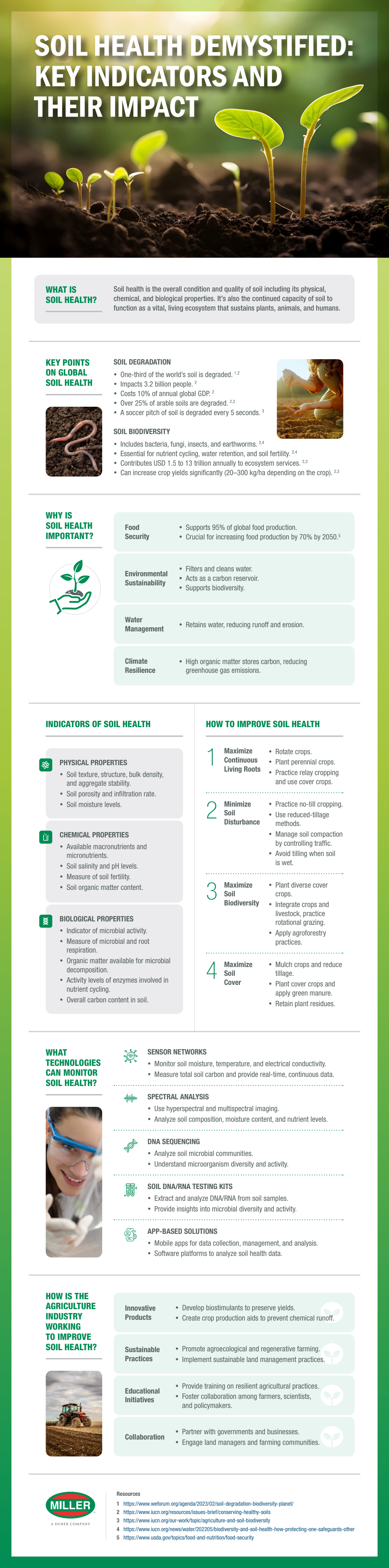
Across the globe, soil degradation is occurring at an alarming rate. Roughly one-third of the planet’s soils are already degraded, impacting more than 3 billion people and costing the global economy around 10% of its annual GDP . This isn’t a problem confined to developing countries or barren landscapes—it’s happening in farmland, forests, and even urban spaces. And without concerted action, it will only get worse.
Understanding Soil Health
Soil health refers to the continued capacity of soil to function as a living ecosystem that sustains plants, animals, and people. It’s not just about dirt—it’s about a balanced, biologically active environment that provides essential ecosystem services like nutrient cycling, water filtration, and carbon sequestration.
Healthy soil is structurally sound, chemically balanced, and biologically rich. It contains bacteria, fungi, insects, and organic matter that break down nutrients and sustain plant growth. These living organisms are crucial for everything from preventing erosion to increasing water retention and crop productivity .
The Ripple Effect of Degraded Soil
The consequences of poor soil health are far-reaching. Degraded soils can’t retain moisture well, leading to more runoff, erosion, and water pollution. They lose their ability to sequester carbon, worsening the effects of climate change. Agricultural productivity declines, contributing to food insecurity. In extreme cases, degraded land becomes unsuitable for farming altogether—pushing communities into poverty and migration.
Soil degradation also undermines efforts to protect biodiversity. A soccer field-sized patch of soil is degraded every five seconds globally—a pace that threatens the delicate balance of ecosystems that rely on healthy ground cover and nutrient flow .
Measuring Soil Health: What to Look For
Soil health isn’t just a vague concept—it can be measured through specific indicators:
- Physical propertieslike soil structure, bulk density, and moisture retention affect its ability to support roots and retain water.
- Chemical indicatorssuch as pH levels, nutrient availability, and salinity provide insights into fertility and plant compatibility.
- Biological markers, including microbial activity and enzyme levels, reveal the vitality of the soil’s living components .
Monitoring these factors allows land managers, farmers, and policymakers to track soil condition and make informed decisions for improvement.
Smart Practices to Restore Soil Health
Fortunately, soil health is not a lost cause. There are practical, science-backed strategies that can reverse degradation and restore fertility:
- Minimize soil disturbance: Reducing tillage helps maintain soil structure and protects the microbiome.
- Maximize continuous living roots: Cover crops and perennials help keep the soil biologically active year-round.
- Promote soil biodiversity: Crop rotation, integrated livestock systems, and agroforestry enhance nutrient cycling and resilience.
- Keep soil covered: Mulching, green manure, and residue retention prevent erosion and retain moisture .
These practices not only improve soil health but also make agricultural systems more resilient to drought, pests, and market shifts.
Technology’s Role in Soil Stewardship
Emerging technologies are also playing a growing role in monitoring and managing soil health. From sensor networks that measure moisture and temperature to DNA sequencing kits that assess microbial diversity, today’s tools offer real-time insights that can transform land management. Mobile apps and data platforms are helping farmers and agronomists make smarter, faster decisions about how to nurture their soils for the long haul .
A Foundation Worth Protecting
The future of global food systems, climate action, and environmental resilience depends on the health of our soil. By investing in sustainable practices, advancing monitoring technologies, and prioritizing soil restoration with agriculture fertilizer products, we can rebuild the foundation upon which our ecosystems—and economies—stand. The solution begins not with what’s above the ground, but with the living layer beneath it.